
Google has had a busy start to 2026, rolling out two core updates and one spam update, between early February and early April. We’ve summarised the updates below, and while Google hasn’t explicitly spelled out the granular reasoning, we’ve been joining the dots to establish the best practices to help optimise your business’s visibility.
The Updates
Early this year, Google released the Discover Core Update, a targeted update to the systems that surface articles in Google Discover (the personalised content feed on mobile). The update was designed to show users more locally relevant content from websites based in their country, reduce clickbait-y content, and surface more in-depth, original, and timely content from sites with demonstrated expertise in a given area.
Following this, a spam update was completed. A spam update is usually an improvement made to Google’s automated spam-detection systems like SpamBrain to ensure sites don’t violate Google’s spam policies. That could mean things like no low-value pages pumped out at scale, no dodgy linking practices, and no pages designed to show one thing to Google and something else to visitors.
Subsequently, Google launched its first broad core update of 2026; Google described this as “a regular update designed to better surface relevant, satisfying content for searchers from all types of sites,” indicating that Google’s ongoing guidance hasn’t changed: focus on helpful, reliable, people-first content. What Google is signalling here is that sites adding genuine, unique value to users, backed by strong, owned data and content that directly addresses real user queries, will be seen as more valuable.
What It Could Mean For Your Business
It is hard to overlook the overall direction of these updates nudging back to: E-E-A-T (Experience, Expertise, Authoritativeness, and Trustworthiness). It’s a framework Google has been sharing guidelines on since it added “Experience” to its Search Quality Rater Guidelines in December 2022.
Joining The Dots
- The February Discover Core Update favours locally relevant, original, and in-depth content from sites with proven topic expertise, a nod to Expertise and Experience.
- The March Spam Update sharpens how Google identifies sites cutting corners on quality, reinforcing Trustworthiness; and
- The March Broad Core Update values helpful, people-first content, an expression of Experience and Authoritativeness working together.
Key E-E-A-T Approaches For Your Business
Case Studies in Blog Content
Talking about your project outcomes and actual results from real jobs in your content (think – original insights, owned data, and proof of real work done) can be a great addition to blogs. This will help demonstrate the kind of first-hand experience Google’s own guidance calls out as a marker of high-quality content, and that potential customers find genuinely useful.
Google Reviews
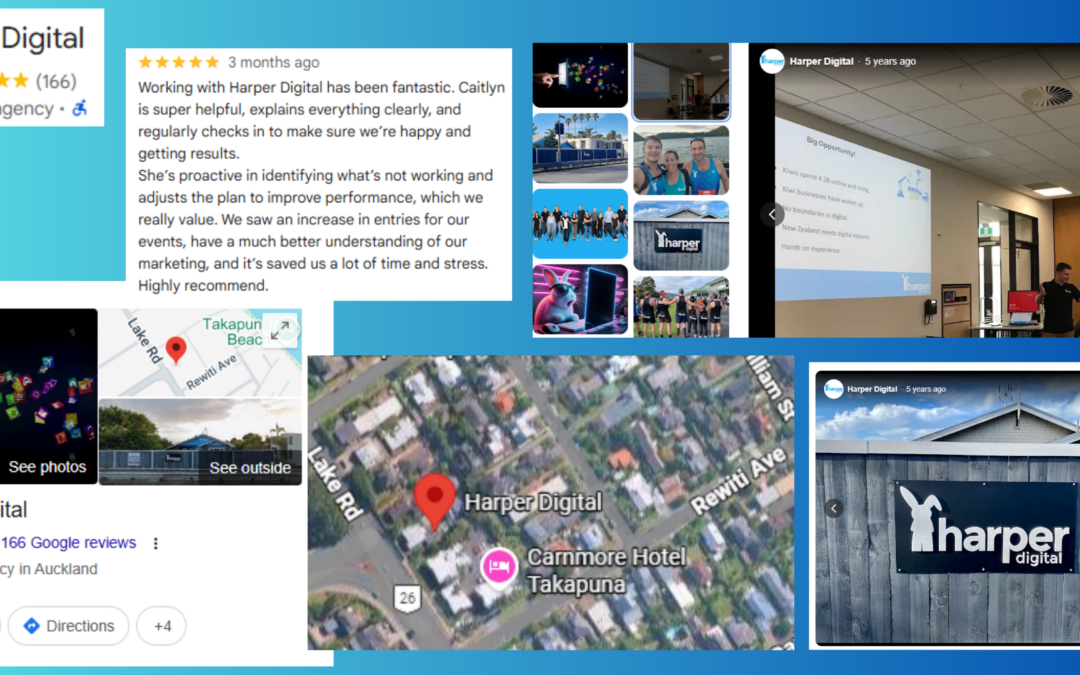
Building and maintaining Google Reviews and developing simple, consistent approaches – a post-appointment follow-up process, staff prompts, or just reducing the friction that stops satisfied customers from leaving their feedback for your business, can showcase trust to both Google and its future customers, as it is a visible, verifiable trust signal.
LinkedIn Profile Linked To the Website
LinkedIn is a high-trust domain in Google’s eyes, and for small businesses especially, this is one of the simplest ways to show Google that you’re a legitimate, active, and recognised entity, not just a URL.
FAQs
A well-written FAQ section structures content around the actual questions people are typing into Google, making a page genuinely more useful and increasingly, it’s also how AI-driven search surfaces pull and cite answers. Including real consumer queries that come through phone calls, enquiry forms, or sales conversations, and then integrating them naturally into existing pages is a reflection of real-world customer communication translated onto content.
Calls to Action and Internal Linking
Strong internal links help Google understand what matters most on your site and how pages connect to each other. They also pass authority between pages, pointing your strongest content toward the pages you most want to rank. Well-placed calls-to-action do the same job for users, guiding them deeper into the site rather than letting them bounce off.
The Bigger Picture
If you’re a visualiser like us, here’s how to look at the bigger picture: Imagine you run a construction business. An industry conference is coming up, and Google is hand-picking a panel of the top builders in the country to share what they really know. Would your name be on it or still, be called on the stage to be part of the discussion? That’s what E-E-A-T really can do for your business, when Google goes looking for the expert in your field.
Atomic Actions Lead To Greater Results
Visibility compounds over time. Building a brand through showcased expertise and authority (case studies, backlinks), providing real value to your customers (addressing their pain points, providing high-quality content), and the feedback you receive (reviews and testimonials), these are a long-game investment, but Google will value the work behind your brand and invite you on stage.
At Harper, we continuously work towards implementing these and much more SEO best practices for our clients and we look forward to helping businesses grow their presence, as we take them to newer heights in the AEO/GEO space where the importance of E-E-A-T continues to rule.
If you’d like to have a chat, or just looking for some advice on where to focus your energy next, we’d love to talk.